Across generations
The proposal concerns inherited changes in populations, not forcing an existing carnivore to eat an unsuitable diet. Nutrition, development and behaviour would all need to support a healthy life.
A future for predators. A life for their prey.
Exploring the case for gradually transforming carnivorous species into herbivores.
An ambitious proposal.
An open scientific question.
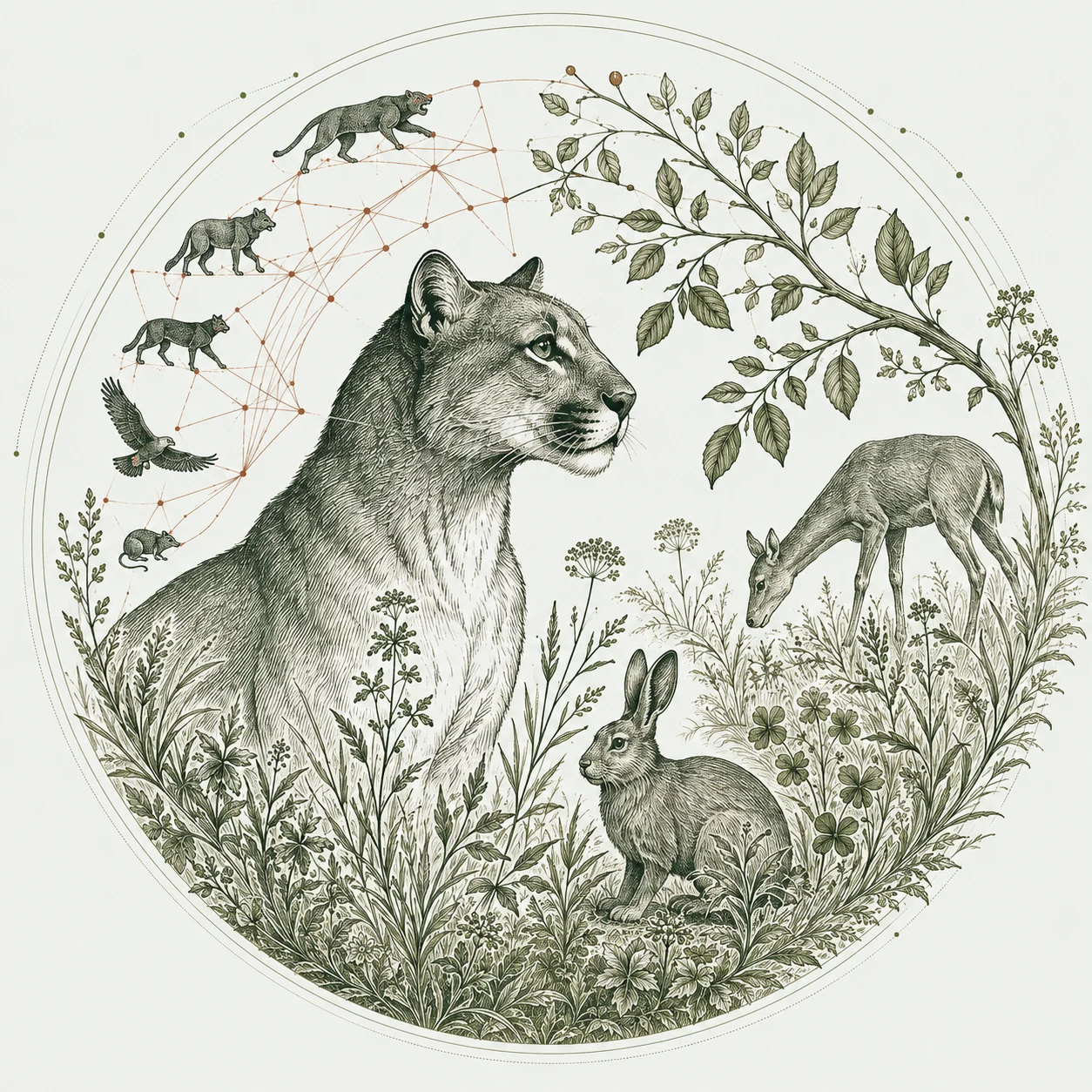
01 /
The problem
A landscape can be magnificent and still be a terrible place to be an animal. Behind the spectacle of the hunt is an individual trying to stay alive. Fear, injury and death are part of the experience of the wild, not merely details of its scenery.
There is strong scientific support for conscious experience in mammals and birds. Their welfare matters even where the precise character of their experience remains uncertain. [3]
Predators matter, too. A lion is not cruel for being a lion. It inherits a body and a way of life that depend on other animals. Compassion should make room for both sides of that relationship.
Herbivorisation begins with a question: if we could eventually change that inheritance without making life worse, would we have reason to try?
of recorded deaths in a synthesis of terrestrial-vertebrate tracking studies were attributed to predation.
This describes the studies’ recorded deaths, not all animals or all suffering in nature.
“The total amount of suffering per year in the natural world is beyond all decent contemplation.”
Richard Dawkins · River Out of Eden, 1995
02 /
The proposal
Herbivorisation is the proposed transformation of carnivorous lineages into herbivorous ones, gradually, across generations. The aim: descendants that neither need nor want to kill other animals to live. [1]
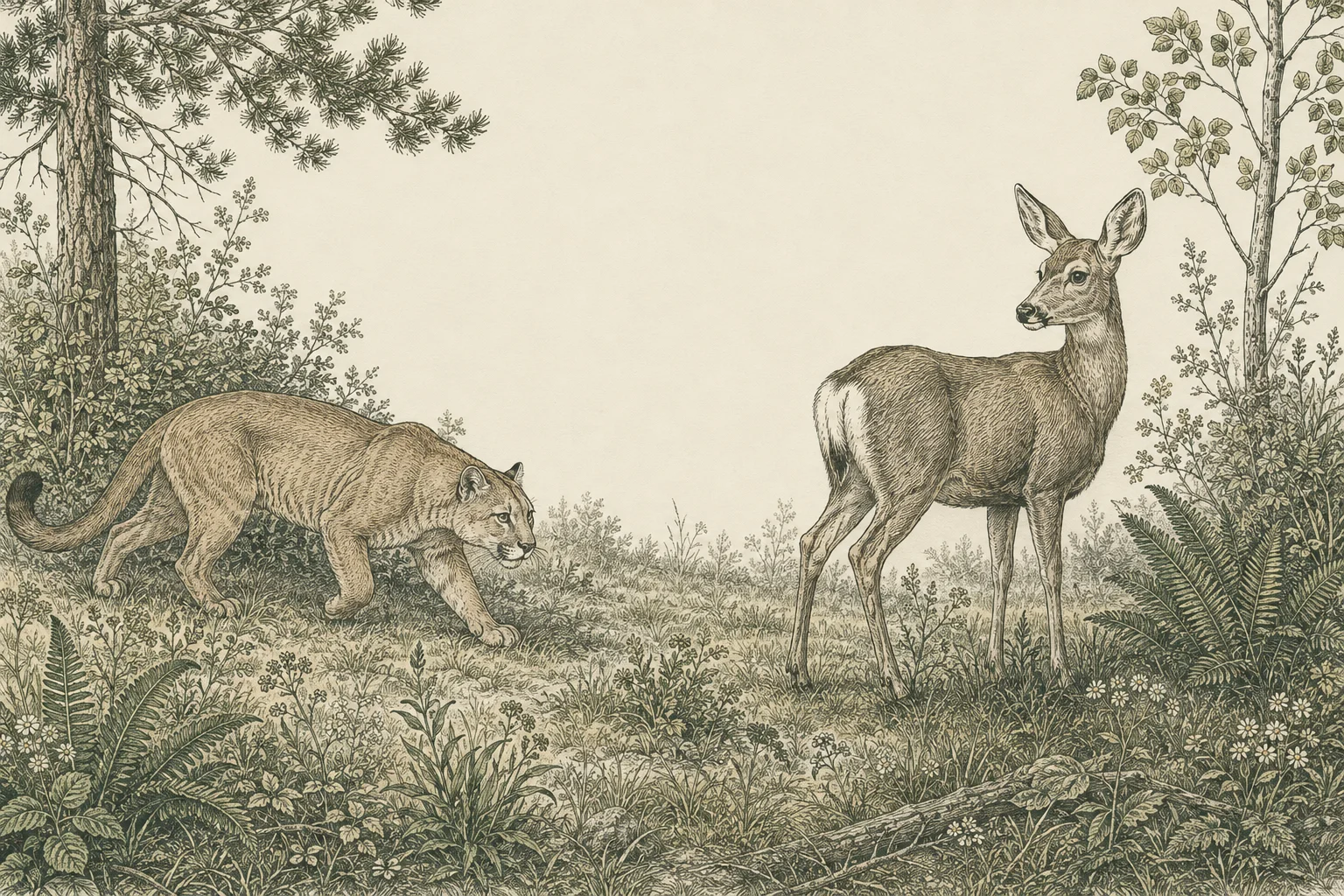
A predator’s survival depends on hunting other animals. Neither side has chosen that relationship.
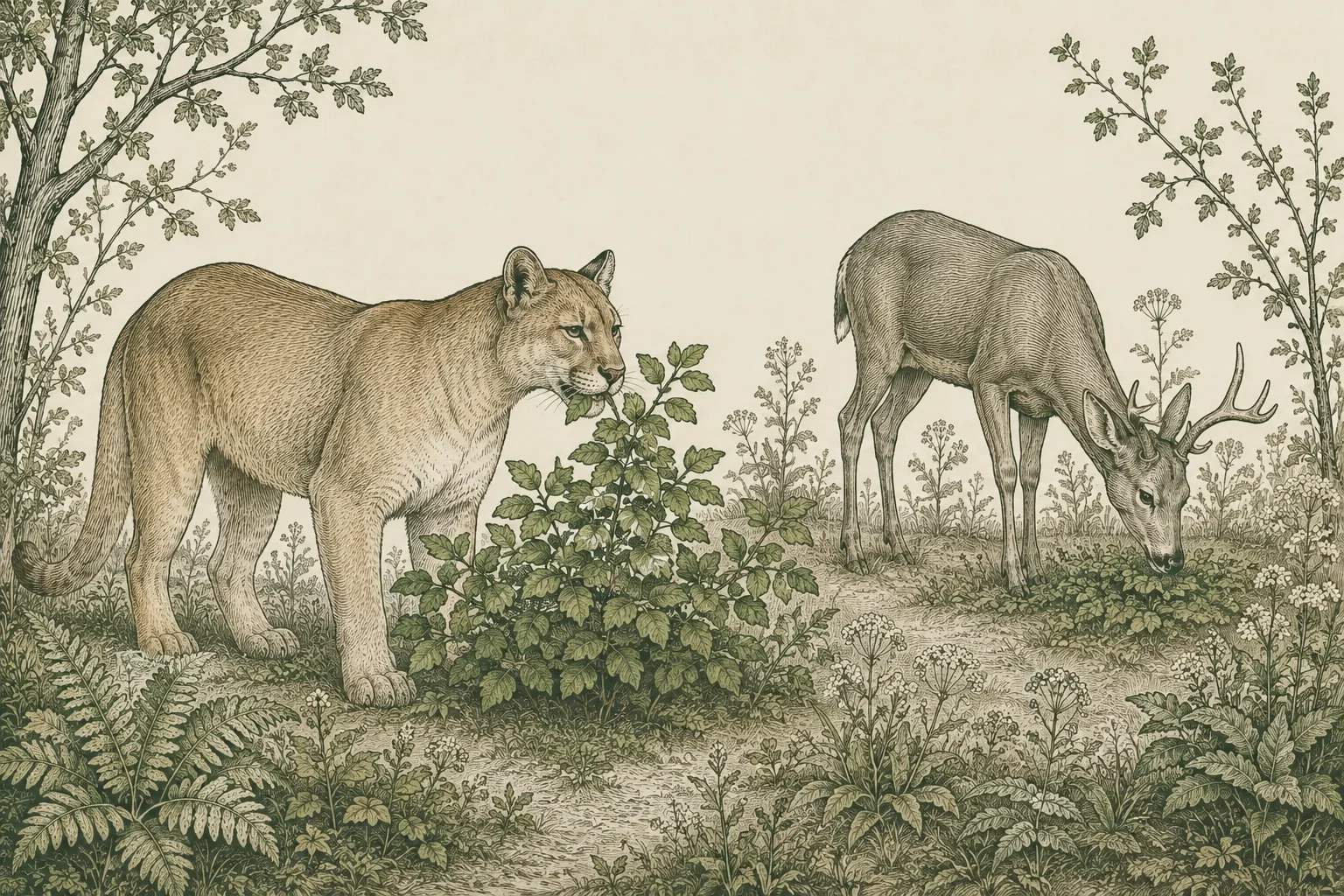
The ambition: descendants that thrive on plants, sharing their habitat with the animals their ancestors once hunted.
An imagined transition across generations. These illustrations express the proposal, not a demonstrated outcome.
The proposal concerns inherited changes in populations, not forcing an existing carnivore to eat an unsuitable diet. Nutrition, development and behaviour would all need to support a healthy life.
Evolution has produced largely plant-eating members of the order Carnivora, including giant pandas. That shows diets can change over evolutionary time; it does not tell us how to safely engineer that change. [1]
Genetics and synthetic biology suggest possible tools, not a ready solution. Any intervention would need evidence of better animal welfare, ecological viability and legitimate public oversight.
03 / The alternatives
The ethical case for herbivorisation is a case for keeping predator lineages in the world. But every proposed response to predation has tradeoffs, including this one. [1]
| Approach | Potential benefit | Main challenge |
|---|---|---|
| Extinction | Ends predation by the lineages removed, whether through killing or preventing reproduction. | Loses those lineages and their ecological roles; could create further suffering and ecological harm. |
| Separation | Keeps predators alive while reducing encounters with prey; alternative food could meet nutritional needs. | Requires confinement or barriers, continuing care, and a dependable food supply. |
| Pain reduction | Could reduce some suffering while retaining existing feeding relationships. | Does not by itself prevent killing; changes to pain and fear could remove protective functions. |
 Herbivorisation Herbivorisation | Aims to preserve predator lineages while ending their dependence on prey. | Technical feasibility, animal health, ecological effects and long-term stability remain unresolved. |
Preserving lineages may keep more future options open than extinction. It does not guarantee that genetic changes or their ecological effects would be reversible.
04 / Open questions
The strongest version of this proposal takes uncertainty seriously. These are obligations for research, not details to wave away.
Read the full discussionYes. Predators influence population sizes, behaviour and the wider food web. Changing those relationships could have cascading effects, including harms greater than the suffering avoided.
A credible programme would need ecological modelling, welfare research, careful testing and long-term monitoring before any consideration of release. The aim is less suffering overall, not merely less visible predation. No general solution has been demonstrated.
Reducing predation could increase some populations and intensify hunger, disease or competition. That would not be a compassionate success.
The proposal discusses possibilities such as fertility control and altered ecological niches. Whether these could work humanely, reliably and at the necessary scale is an open question. Population welfare would have to be assessed across generations. [1]
Evolutionary changes in diet show that carnivory is not an immutable property of a lineage. But the ability to edit genes is far from the ability to redesign a healthy animal.
Digestion, essential nutrients, anatomy, metabolism and motivation would all matter. Herbivorisation remains a research proposal. It is not a reason to feed today’s obligate carnivores an inappropriate diet.
Naturalness alone does not settle whether something is good for an animal. Disease is natural; treating it can still be kind. Equally, our ability to intervene does not establish that an intervention is wise.
The relevant questions are what animals experience, what would change for them, and how confident we can be in the consequences. Reverence for nature and concern for its inhabitants need not pull in opposite directions.
Care, too. Predators are not moral wrongdoers, and their needs cannot be dismissed because they harm prey. The appeal of herbivorisation is precisely the ambition to preserve their lineages and enable their descendants to flourish.
That ambition would fail if the process caused serious illness, distress or deprivation. Animal welfare must constrain both the research and any eventual intervention.
Changes to shared ecosystems could not legitimately be the decision of a single researcher, organisation or country. Affected communities, Indigenous peoples, ecologists, animal-welfare researchers and the wider public would need a meaningful voice.
Transparency, accountable institutions and the ability to stop a harmful programme are central. The ethical ambition does not remove the need for consent, safeguards or scrutiny.
05 / The vision
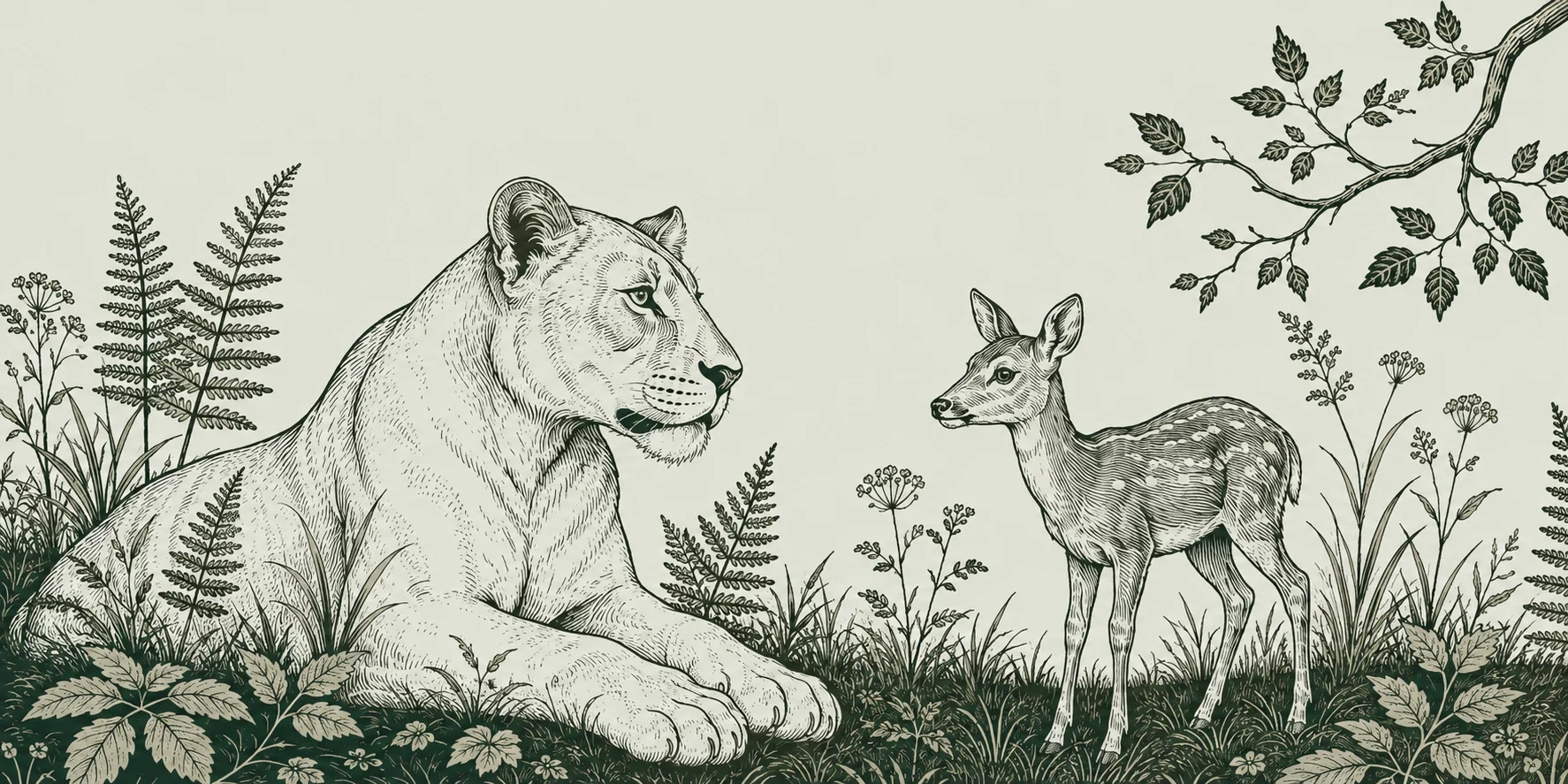
The long-term ambition is a living world in which the flourishing of one animal no longer depends on the suffering of another.
A circle of concern wide enough to include the hunter and the hunted.
06 / The research
This site makes a case. The sources let you examine it.
The ethical argument, the evidence and the uncertainties are yours to explore.
Journal article · 2024
Herbivorisation of Predator Species for the Compassionate Stewardship of Earth’s Ecosystems
The detailed ethical case: the proposal, alternative strategies and objections. Published in the Journal of Applied Animal Ethics Research, 6, 175–204. An argument for research, not an experimental demonstration.
Foundational essay
The philosophical starting point: why predation matters morally, why preserving predators might be preferable to removing them, and what compassionate stewardship could mean.
Scientific declaration · 2024
A statement on the evidence for conscious experience in other animals, and on taking welfare risks seriously under uncertainty.
Read the declarationEmpirical synthesis · 2019
The source of the 55% figure: a synthesis of 1,114 tracking studies covering 305 species, 120,657 individuals and 42,755 deaths of known cause.
Read the studyContinue reading: Rational Animal Ethics by Stijn Bruers and The Abolitionist Project.